 By llew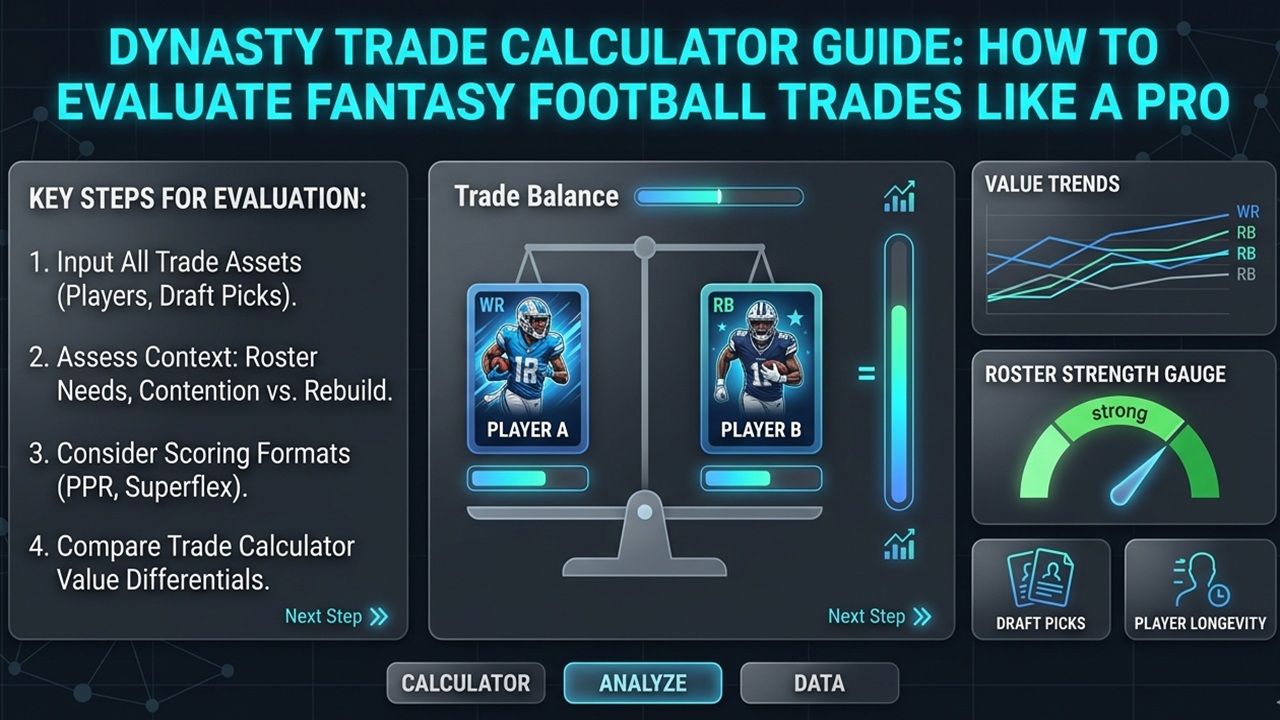
Fantasy football trades can be tricky, but dynasty leagues make them even more complicated. In a standard fantasy league you mostly focus on the current season. In a dynasty league, every decision affects your team for years.
Managers must think about player age, future performance, draft picks, roster depth, and rebuilding strategies. A young wide receiver might not produce huge numbers this season but could become a star in two years. On the other hand, a veteran running back might help you win now but lose value quickly.
Because of these factors, judging whether a trade is fair can be difficult. That is where a dynasty trade calculator becomes extremely useful. This tool compares the value of players and draft picks so managers can quickly see which side of a deal holds more value.
Using a calculator does not guarantee every trade will be perfect, but it helps reduce guesswork and makes decision making much easier.
What Is a Dynasty Trade Calculator

A dynasty trade calculator is a digital tool designed to help fantasy football managers evaluate potential trades in dynasty leagues. Instead of relying purely on opinion or gut feeling, the calculator uses player data and value models to estimate the worth of players and draft picks.
These tools typically evaluate several key factors. Player performance history plays a major role because it shows how productive a player has been over time. Age is another important element since younger players often carry more future value in dynasty formats.
Many calculators also include draft pick values. Future rookie picks are extremely valuable in dynasty leagues because they allow managers to acquire young talent.
League scoring settings also affect results. A player may have higher value in a point per reception league compared with a standard scoring league.
Fantasy managers use these calculators before accepting or sending trade offers. By entering the players and picks involved, they can quickly see if the trade is balanced or heavily favors one side.
How Dynasty Trade Calculators Work
At their core, dynasty trade calculators rely on value algorithms. These algorithms convert player performance, projections, and other factors into numerical values. Each player receives a score that represents their dynasty value.
One major component is performance data. Statistics such as yards, touchdowns, receptions, and snap share help determine how productive a player has been. Consistency and reliability also influence these scores.
Another important factor is draft pick valuation. Many calculators use models based on historical rookie performance to estimate the value of future picks. For example, a first round rookie pick is usually worth far more than a late round selection.
Future projection systems also play a role. These systems analyze trends such as age curves, workload, and team usage patterns to estimate future performance.
League settings further influence results. In Superflex leagues quarterbacks often carry higher value because managers can start two of them. In point per reception leagues, pass catching running backs and wide receivers receive a boost.
Because each calculator uses slightly different models, the results may vary. That is normal and simply reflects different valuation methods.
Step by Step Guide: How to Use a Dynasty Trade Calculator
Using a dynasty trade calculator is fairly simple once you understand the process. Most tools follow a similar structure.
First, enter the players involved in the trade. Select the players that each team would receive. The calculator will automatically assign values to each player.
Second, add any draft picks included in the deal. Rookie picks can have a large impact on the final result, especially early round selections.
Third, choose your league format. Options usually include settings such as Superflex, point per reception scoring, or standard formats. Selecting the correct settings ensures the values match your league environment.
Fourth, review the trade value score. Most calculators show a numerical comparison between the two sides. If one side has significantly more value, the tool will indicate that imbalance.
Fifth, analyze the results within your team strategy. If you are rebuilding, a package with younger players and future picks might be more appealing even if the calculator shows only a small advantage.
The goal is not simply to chase the highest number but to see whether the trade fits your roster plan.
Key Factors That Affect Trade Value in Dynasty Leagues
Several factors strongly influence how players are valued in dynasty fantasy football.
Age is often the most important. Younger players tend to hold value longer, which makes them attractive assets. A twenty three year old receiver with growing production could be more valuable than a thirty year old star nearing the end of his career.
Injury history also plays a role. Players with frequent injuries may lose value because managers worry about long term durability.
Team situation matters as well. A talented running back may struggle if he is stuck behind another starter, while a receiver on a pass heavy offense might see increased opportunity.
Future rookie draft picks are another major asset. Many dynasty managers build their teams by collecting first round picks that can turn into young stars.
Finally, league scoring settings can dramatically change player value. In leagues that reward receptions heavily, pass catching players become more valuable.
All these elements are considered by calculators when estimating trade value.
Best Strategies to Win More Fantasy Football Trades
Winning trades in dynasty leagues requires more than simply accepting whatever the calculator suggests. Smart managers combine strategy with data.
One effective approach is targeting young breakout players before they become household names. If a player shows signs of growth, acquiring them early can provide massive long term value.
Another strategy is selling veteran players when their value peaks. Running backs in particular often lose value quickly, so trading them at the right time can bring strong returns.
Trading with rebuilding teams can also create opportunities. Those managers may be willing to move experienced players in exchange for draft picks or younger prospects.
Understanding market trends is equally important. Player value can change quickly based on news, injuries, or performance.
Using a dynasty trade calculator before sending offers helps ensure that your proposals remain competitive while still benefiting your roster.
For deeper insights into player performance and rankings, many managers also review expert before finalizing trades.
Common Mistakes When Using a Dynasty Trade Calculator
While calculators are helpful, many managers misuse them.
One common mistake is trusting the numbers blindly. Calculators provide estimates, not guaranteed outcomes. Real football situations change constantly.
Another mistake is ignoring your team needs. A trade might appear balanced mathematically but still weaken your starting lineup.
Some users also forget to adjust league settings. Incorrect scoring formats can produce misleading values.
Overvaluing big name players is another issue. Star players often carry hype that inflates perceived value even if their long term outlook is uncertain.
Think of calculators as guides rather than final decision makers.
Best Dynasty Trade Calculators Fantasy Managers Use
Several popular tools help dynasty managers evaluate trades effectively.
KeepTradeCut is one of the most widely used calculators. It updates player values based on community rankings from thousands of fantasy players.
FantasyCalc focuses on real trade data from active leagues. This approach reflects how managers are actually valuing players in trades.
DynastyProcess offers a calculator that incorporates multiple ranking sources to generate balanced trade values.
DLF Dynasty Trade Analyzer is another respected tool used by experienced dynasty players to compare trade packages.
Many managers check more than one calculator to see if the results align.
Interestingly, just as fantasy managers use tools to predict trade outcomes, people planning families sometimes use tools like an to estimate important biological timelines. In both cases, calculators help simplify complex decisions.
When You Should Not Rely Only on a Calculator
There are moments when human judgment matters more than numerical values.
Rookie hype cycles are a good example. A newly drafted player might carry massive excitement before playing a single professional game. Calculators may struggle to measure that uncertainty.
Breakout candidates also require careful observation. A young player who suddenly gains a larger role could outperform projections quickly.
League dynamics can matter too. Some leagues value draft picks heavily while others prioritize proven veterans.
Finally, teams pushing for a championship may accept slightly uneven trades if it helps them win immediately.
In these situations, calculators should support your thinking rather than replace it.
Conclusion: Make Smarter Trades With the Right Tools
Dynasty fantasy football trades involve far more complexity than traditional league deals. Managers must balance present production with future potential, player age, and draft pick value.
A dynasty trade calculator simplifies this process by turning complex data into easy to understand comparisons. It allows managers to evaluate trade packages quickly and identify potential advantages.
However, the most successful managers combine these tools with personal strategy and knowledge of their league.
When used correctly, calculators can improve decision making, reduce risky trades, and help build stronger dynasty rosters over time.
FAQ Section
What is the best dynasty trade calculator
Many fantasy managers prefer tools like KeepTradeCut, FantasyCalc, DynastyProcess, and DLF Dynasty Trade Analyzer. Each uses different data sources, so checking multiple tools can provide a more balanced perspective.
Are dynasty trade calculators accurate
They are generally reliable for estimating player and draft pick value. However, they rely on projections and historical data, which means real outcomes can still differ.
How do dynasty draft picks affect trade value
Future rookie picks are extremely valuable in dynasty leagues because they provide access to young talent. Early round picks usually carry much higher trade value than later selections.
Should I trust trade calculator results
You should use them as guidance rather than absolute answers. Consider your roster needs, league format, and long term strategy before making a final decision.
Do dynasty trade calculators work for Superflex leagues
Yes. Most calculators allow you to select league settings such as Superflex scoring. In those formats, quarterbacks often gain significant value compared with standard leagues.