 By llew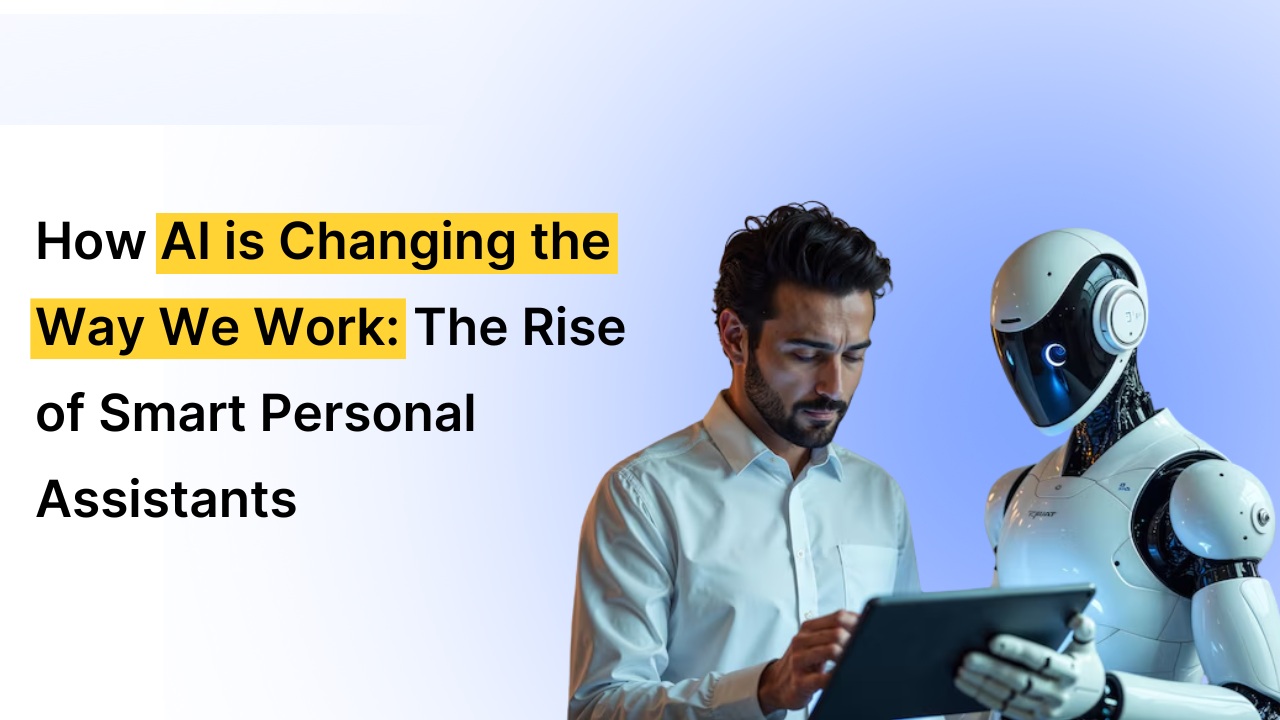
Artificial intelligence is no longer something that only tech companies or researchers talk about. Over the last few years, it has quietly moved into everyday workflows. Professionals now rely on AI to write emails, summarize documents, analyze information, and even brainstorm ideas. What once felt like a futuristic concept has quickly become a practical tool used across industries.
Platforms such as ChatGPT, Microsoft Copilot, Google Gemini, and Claude are at the center of this transformation. These systems are not just answering questions. They are helping people complete real work tasks faster and with less effort.
The biggest shift is that AI is evolving beyond the role of a simple chatbot. Instead, it is becoming a digital coworker. A personal AI assistant can support decision making, research complex topics, automate repetitive tasks, and help organize daily workflows. For many professionals in 2026, working with AI is starting to feel similar to collaborating with a colleague who is always available and ready to help.
What Is a Personal AI Assistant

A personal AI assistant is an intelligent software system designed to help individuals perform tasks, manage information, and improve productivity through natural conversation. Instead of navigating complex menus or commands, users can simply describe what they need in everyday language.
This concept is very different from earlier voice assistants such as Siri or Alexa. Those tools were mainly designed to perform simple actions like setting reminders, playing music, or answering quick questions. Modern AI assistants go much further.
Today’s AI tools can write blog posts, generate code, summarize long research papers, create presentations, and organize large amounts of information in seconds. They also understand context within conversations, which allows them to respond more accurately to follow up requests.
Another important capability is integration. Personal AI assistants can connect with productivity software, calendars, documents, and communication tools. This means they are not just answering questions. They are becoming part of daily workflows and helping users complete tasks more efficiently.
Why Personal AI Assistants Are Growing Rapidly in 2026
Several trends are driving the rapid adoption of personal AI assistants. One of the biggest factors is the rise of remote and hybrid work. Many professionals now manage their projects, communication, and research entirely online. As workloads increase, people are looking for smarter ways to handle repetitive tasks.
Digital professionals often deal with dozens of emails, documents, and meetings every day. AI assistants help reduce this burden by summarizing information, drafting responses, and organizing tasks automatically. This saves time and allows workers to focus on more strategic decisions.
Another major driver is the rapid advancement of large language models. These systems have become far more capable at understanding context, generating accurate responses, and handling complex instructions. As a result, AI assistants feel more reliable and useful than earlier versions.
Technology companies are also integrating AI directly into their ecosystems. Microsoft has embedded Copilot into tools like Word, Excel, and Teams. Google has introduced Gemini across Google Workspace. These integrations make AI assistants accessible inside software people already use daily.
Because of these developments, personal AI assistants are quickly moving from optional tools to essential productivity partners.
How AI Is Becoming a Digital Co Worker
The idea of AI as a digital coworker is becoming increasingly realistic. Instead of simply responding to questions, AI systems now participate in workflows and collaborate with users on projects.
For example, a marketing professional might start by asking an AI assistant to brainstorm campaign ideas. The AI can suggest creative angles, generate headlines, and outline potential strategies. From there, the same assistant can help write blog content, social media posts, and email campaigns.
Developers use AI assistants to generate code snippets, debug errors, and explain complex programming concepts. This speeds up development and allows programmers to focus on solving larger technical challenges.
In research focused roles, AI tools are often used to summarize reports, analyze data, and gather insights from large datasets. Instead of spending hours reading documents, professionals can quickly extract the most important points.
Even everyday tasks benefit from AI collaboration. Writing emails, preparing presentations, and organizing project notes can all be assisted by AI. The result is a workflow where humans provide direction and creativity while AI handles repetitive or time consuming work.
This collaborative model is why many experts describe AI assistants as digital coworkers rather than simple tools.
Industries Where Personal AI Assistants Are Making the Biggest Impact
Personal AI assistants are transforming productivity across multiple industries. Some sectors are experiencing particularly strong benefits because of the large amount of digital information they manage.
Marketing and content creation is one of the most visible examples. Writers, marketers, and social media managers use AI to generate content ideas, draft articles, analyze audience trends, and optimize campaigns. This allows teams to produce more content while maintaining quality.
Software development is another field where AI assistance is growing quickly. Developers use AI coding tools to generate functions, troubleshoot errors, and explain unfamiliar programming concepts. This speeds up development cycles and reduces time spent debugging.
Customer support teams are also benefiting from AI powered assistants. These tools can generate response suggestions, summarize customer conversations, and provide quick access to knowledge bases. This helps support agents resolve issues more efficiently.
In education and research, AI assistants help summarize academic papers, organize study materials, and assist with data analysis. Researchers can explore complex topics faster and identify relevant information more easily.
Business operations and management teams use AI to prepare reports, analyze performance data, and streamline internal communication. By automating routine tasks, organizations free up valuable time for strategy and decision making.
Key Features That Make Modern AI Assistants Powerful
Modern AI assistants are powerful because they combine several advanced capabilities into a single system.
One of the most important features is natural language understanding. Users can communicate with AI using everyday language instead of complicated commands. This makes the technology accessible to people without technical expertise.
Memory and context tracking also play a key role. AI assistants can remember details from earlier in a conversation and apply them to later tasks. This helps create a smoother and more productive interaction.
Automation is another major advantage. AI assistants can help automate repetitive tasks such as summarizing documents, generating reports, or organizing notes. When integrated with productivity tools, these automations become even more valuable.
Multimodal capabilities are also becoming common. Modern AI systems can process text, voice commands, and images. This allows users to interact with AI in different ways depending on their needs.
Finally, real time knowledge retrieval enables AI assistants to gather relevant information quickly. Instead of searching through multiple websites, users can receive summarized insights in seconds.
Together, these features are what make personal AI assistants feel more like intelligent collaborators rather than basic software tools.
Benefits of Using AI as a Digital Co Worker
Using AI as a digital coworker provides several practical advantages for both individuals and organizations.
One of the most noticeable benefits is increased productivity. Tasks that once required hours of research or writing can now be completed much faster with AI support.
AI also helps professionals make decisions more quickly. By summarizing data and highlighting key insights, it reduces the time needed to understand complex information.
Another advantage is the reduction of repetitive work. Tasks like formatting documents, drafting emails, or organizing notes can be automated, freeing up time for creative and strategic thinking.
Creativity is also enhanced when people collaborate with AI. Brainstorming ideas with an AI assistant often leads to new perspectives and unexpected solutions.
Perhaps most importantly, AI assistants are available at any time. Unlike human coworkers who work limited hours, AI tools can assist with tasks whenever they are needed.
Challenges and Concerns Around Personal AI Assistants
Despite their benefits, personal AI assistants also raise several important concerns.
Data privacy and security are among the most frequently discussed issues. Many AI tools require access to documents, emails, and other sensitive information. Organizations must ensure that this data is handled securely.
Another concern is over reliance on AI tools. While AI can assist with many tasks, it should not replace human judgment. Professionals still need to verify information and apply critical thinking.
Accuracy can also be a challenge. AI systems sometimes generate incorrect or misleading responses, often referred to as hallucinations. This is why reviewing AI generated content remains essential.
Ethical considerations are another important factor. Questions around copyright, transparency, and responsible AI usage continue to shape discussions about how these tools should be used.
Addressing these challenges will be essential as AI assistants become more deeply integrated into professional environments.
The Future of Personal AI Assistants
The capabilities of personal AI assistants are expected to expand significantly over the next few years. One of the most exciting developments is the rise of autonomous AI agents. These systems will be able to perform multi step tasks with minimal human guidance.
Operating systems may also integrate AI more deeply. Instead of opening separate applications, users could simply ask their AI assistant to complete tasks across multiple programs.
Another major trend is personalization. Future AI assistants may learn individual work habits, preferences, and communication styles. This would allow them to provide more relevant suggestions and assistance.
Voice interaction is also likely to play a larger role. Conversational AI coworkers that respond naturally to spoken instructions could make digital collaboration even more seamless.
As these technologies evolve, personal AI assistants are likely to become a permanent part of modern work environments.
Frequently Asked Questions About Personal AI Assistants
What is a personal AI assistant
A personal AI assistant is a software tool that uses artificial intelligence to help users perform tasks, manage information, and improve productivity through natural conversations.
How is AI becoming a digital coworker
AI is becoming a digital coworker by assisting with real work tasks such as writing documents, analyzing data, generating code, and organizing workflows. Instead of only answering questions, it actively helps complete projects.
Which AI assistants are most popular in 2026
Some of the most widely used AI assistants include ChatGPT, Microsoft Copilot, Google Gemini, and Claude. These platforms offer advanced capabilities for writing, research, coding, and productivity.
Are personal AI assistants safe to use for work
Most AI assistants include security measures, but users should still be careful about sharing sensitive information. Organizations often establish guidelines to ensure safe and responsible AI usage.
Can AI replace human employees
AI is designed to assist rather than replace humans. While it can automate repetitive tasks, creativity, strategic thinking, and decision making still rely heavily on human expertise.
Conclusion: The New Era of Human AI Collaboration
The rise of personal AI assistants marks a major shift in how people work with technology. Instead of functioning as simple tools, AI systems are becoming collaborative partners that support productivity, creativity, and decision making.