 By llew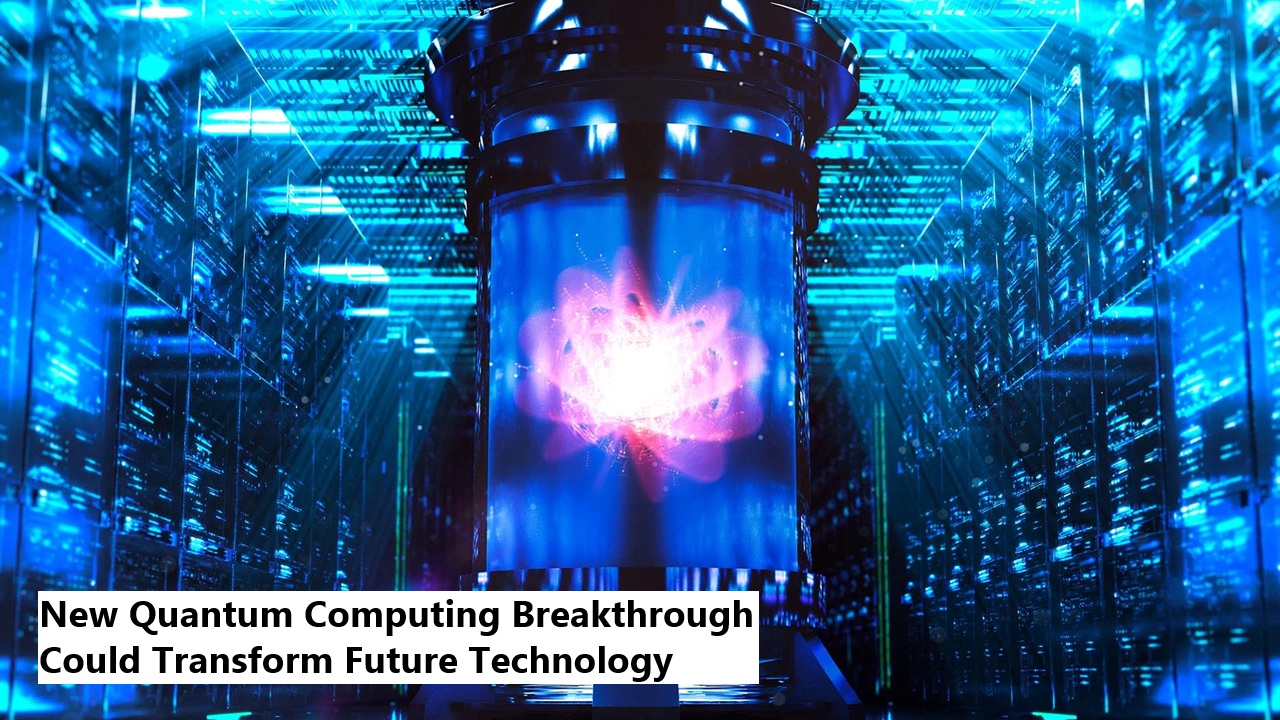
For decades, scientists have talked about quantum computing as the future of technology. Now, that future may be getting closer. A recent quantum computing breakthrough has captured global attention because it promises to solve problems that today’s computers struggle with.
Traditional computers process information using bits that represent either 0 or 1. Quantum computers work very differently. They use quantum mechanics to perform calculations at speeds that could transform industries.
Researchers believe this new development could reshape fields like artificial intelligence, cybersecurity, medicine, and climate science. Tasks that currently take years to calculate might one day take minutes.
While quantum computing is still in its early stages, the latest breakthrough shows that progress is accelerating. Experts say we may be entering a new technological era where computing power grows beyond anything we have seen before.
What Is Quantum Computing? Simple Explanation
To understand why quantum computing is such a big deal, it helps to look at how regular computers work.
Classical computers, including laptops and smartphones, use bits to store information. Each bit can be either 0 or 1. Complex calculations are performed by processing millions or billions of these bits in sequence.
Quantum computers operate using qubits instead of bits. A qubit can represent 0, 1, or both at the same time through a principle known as superposition. This allows quantum systems to explore many possible solutions simultaneously.
Another important concept is entanglement. When qubits become entangled, the state of one qubit instantly affects another, even if they are physically separated. This creates powerful computational connections that classical computers cannot replicate.
Because of these properties, quantum computers have the potential to solve extremely complex problems much faster than traditional systems. This includes tasks like molecular simulation, optimization problems, and large scale data analysis that would take classical computers years to complete.
The Latest Quantum Computing Breakthrough Explained
The latest quantum computing breakthrough comes from ongoing research by major technology companies and leading universities. In recent experiments, scientists demonstrated a new way to reduce computational errors while maintaining stable quantum operations, which has long been one of the biggest barriers in the field.
One key development involves improved quantum error correction techniques. Quantum systems are extremely sensitive to environmental interference such as temperature fluctuations or electromagnetic noise. Even small disturbances can cause calculations to fail.
Researchers have now created more reliable qubit architectures that remain stable for longer periods. Some experimental systems are achieving higher fidelity operations and better coherence times, meaning qubits can perform more calculations before errors occur.
In addition, companies like IBM and Google have introduced more advanced quantum processors containing dozens or even hundreds of qubits. These processors allow scientists to run more complex quantum algorithms than ever before.
While the breakthrough does not yet replace classical computers, it represents a major step forward. Each improvement brings quantum systems closer to solving real world problems that were previously impossible for conventional machines.
Why This Quantum Breakthrough Matters for the Future
The significance of this breakthrough goes far beyond academic research. If quantum computing continues to advance, it could dramatically increase the speed and efficiency of solving some of the world’s hardest problems.
One of the biggest improvements involves faster problem solving capabilities. Quantum algorithms can evaluate multiple possibilities at the same time, making them particularly powerful for optimization tasks.
Another major benefit is the development of more stable quantum systems. Earlier prototypes were extremely fragile and prone to errors. New designs are improving qubit stability and extending the time available for calculations.
Lower error rates are also critical. Reducing computational errors allows scientists to run longer and more reliable algorithms, which is essential for practical applications.
Perhaps the most exciting possibility is the development of scalable quantum computers. Instead of small experimental machines, future systems may include thousands or even millions of qubits working together.
If this happens, industries across the world could experience a dramatic shift in computational capability.
Industries That Could Be Transformed by Quantum Computing
Healthcare and Drug Discovery
Quantum computers could significantly speed up drug discovery by simulating molecular interactions with incredible accuracy. Researchers currently rely on time consuming laboratory testing and complex simulations. Quantum systems may allow scientists to analyze proteins, chemical reactions, and potential medicines much faster, leading to quicker development of treatments for diseases.
Artificial Intelligence and Machine Learning
Artificial intelligence relies heavily on processing large datasets and optimizing algorithms. Quantum computing could accelerate these processes dramatically. Advanced quantum algorithms may allow machine learning systems to analyze patterns faster, train models more efficiently, and solve optimization problems that are currently too complex for classical computing systems.
Cybersecurity and Encryption
Quantum computing has the potential to both strengthen and challenge modern cybersecurity systems. Many encryption methods used today rely on mathematical problems that classical computers cannot easily solve. Powerful quantum machines may eventually break some of these systems, which is why researchers are already developing quantum resistant encryption techniques.
Climate Modeling and Energy Research
Climate simulations require massive computational resources because they involve countless variables interacting across the planet. Quantum computers could help scientists build more accurate climate models and explore new energy solutions. This may improve weather forecasting, renewable energy design, and strategies for reducing global carbon emissions.
Major Companies Racing to Build Quantum Computers
The race to build powerful quantum computers is now one of the most competitive areas in technology.
IBM has been a leader in quantum research, regularly releasing new quantum processors and offering cloud access to quantum systems for developers.
Google gained attention after demonstrating quantum supremacy, a milestone where a quantum computer performed a calculation that would be nearly impossible for classical machines.
Microsoft is focusing on scalable quantum architectures and developing tools that help programmers build quantum algorithms.
Intel is investing heavily in quantum chip manufacturing and hardware development.
At the same time, startups such as Rigetti and IonQ are pushing innovation with new hardware designs and quantum cloud platforms.
Together, these companies are driving rapid progress in the quantum computing ecosystem.
Challenges Quantum Computing Still Faces
Despite impressive progress, quantum computing still faces several major challenges before it becomes widely practical.
One of the biggest issues is error correction. Quantum calculations are extremely sensitive, and even minor disturbances can produce incorrect results.
Another challenge is the need for extremely low temperatures. Many quantum processors must operate near absolute zero, requiring complex refrigeration systems.
Hardware stability is also a concern. Qubits can lose their quantum state quickly, limiting how long computations can run.
Finally, the cost of development remains very high. Building and maintaining quantum systems requires specialized equipment and highly skilled researchers.
Overcoming these challenges will be essential for turning experimental quantum machines into reliable commercial technology.
When Will Quantum Computers Become Mainstream?
Experts believe quantum computing will evolve gradually rather than replacing classical computers overnight.
In the short term, quantum systems will likely be used alongside traditional computers for specialized tasks such as complex simulations and optimization problems.
Some researchers estimate that commercially useful quantum applications could appear within the next decade, particularly in fields like chemistry, logistics, and financial modeling.
However, fully scalable quantum computers capable of solving a wide range of real world problems may take longer to develop.
Even so, the pace of research has accelerated significantly in recent years, and each new breakthrough brings the technology closer to practical use.
What This Breakthrough Means for the Next Generation of Technology
Quantum computing could become a foundational technology for the next generation of innovation.
In artificial intelligence, quantum systems may help process enormous datasets more efficiently. In cybersecurity, they could enable new forms of secure communication through quantum encryption.
Researchers are also exploring how quantum computing might support space exploration, advanced materials research, and complex scientific simulations.
The combination of quantum computing with other emerging technologies could unlock solutions to problems that have remained unsolved for decades.
While the technology is still developing, the long term potential is enormous.
Conclusion: The Beginning of the Quantum Technology Revolution
The latest quantum computing breakthrough highlights how rapidly this field is evolving. What once seemed like theoretical science is now moving closer to real world applications.
Although challenges remain, improvements in qubit stability, error correction, and processor design are pushing quantum technology forward.
If progress continues, quantum computers could transform industries ranging from medicine to cybersecurity.
We may still be in the early stages, but the direction is clear. Quantum computing is no longer just a research project. It is becoming one of the most important technological revolutions of the 21st century.