 By llew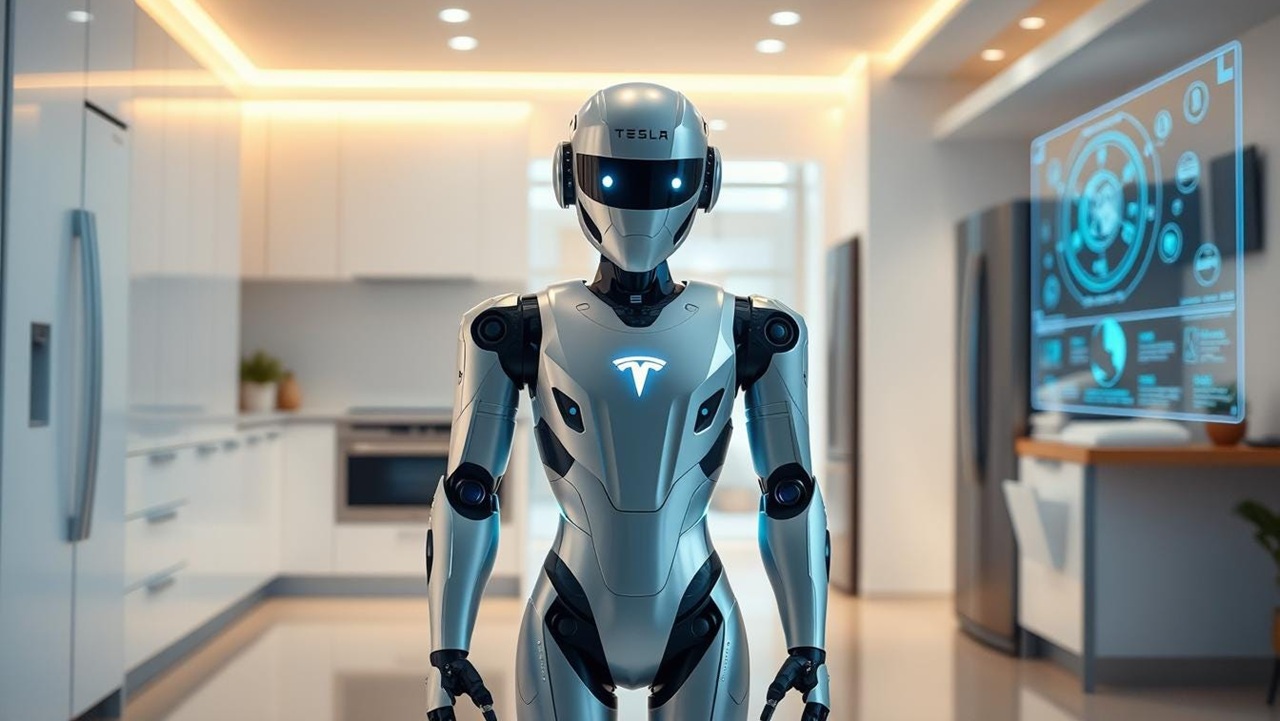
Tesla has always been at the forefront of innovation, blending electric vehicle technology with cutting-edge artificial intelligence. In recent years, Tesla has accelerated its focus on AI-driven projects, most notably in autonomous driving and humanoid robotics. The Optimus robot, Tesla’s humanoid initiative, and advancements in Full Self-Driving (FSD) software are shaping the future of automation. These developments not only highlight Tesla’s ambitions but also signal a shift in how AI may transform everyday life, from commuting to industrial applications.
Elon Musk envisions a future where Tesla AI and robotics seamlessly integrate with human activities, reducing labor-intensive tasks and enhancing efficiency. In this article, we’ll explore Tesla’s latest AI breakthroughs, the progress of the Optimus robot, updates in self-driving technology, and what these innovations mean for the industry and consumers alike.
Tesla Optimus Robot: A New Era in Humanoid Robotics
The Optimus robot, sometimes referred to as Tesla Bot, is Tesla’s ambitious humanoid robot project designed to handle repetitive and dangerous tasks. Standing over 5 feet tall and weighing around 125 pounds, Optimus is designed to carry up to 45 pounds, walk, and interact with human environments safely.
Tesla’s approach to robotics is unique because it leverages the same AI and neural network technologies used in its autonomous vehicles. Optimus benefits from Tesla’s proprietary Dojo supercomputer, which processes vast amounts of data to improve perception, movement, and decision-making. Musk envisions Optimus not only performing factory or warehouse work but potentially serving in households, assisting with everyday chores.
Recent demonstrations have shown Optimus walking, lifting objects, and following simple instructions. Tesla aims to produce these robots at scale, eventually making them accessible for commercial and personal use. While some experts remain cautious about Tesla’s timeline, the progress indicates a serious commitment to humanoid robotics that could revolutionize labor-intensive industries.
Full Self-Driving (FSD) Progress: Tesla’s Road to Autonomy
Tesla’s Full Self-Driving (FSD) system is a crucial part of its AI portfolio. Designed to navigate complex urban environments, highways, and residential areas, FSD uses a combination of cameras, radar, ultrasonic sensors, and neural networks to operate vehicles autonomously.
The latest FSD beta updates show improvements in lane recognition, pedestrian detection, traffic signal response, and decision-making in complex scenarios. Tesla’s neural network continuously learns from billions of miles driven across its fleet, enhancing the system’s ability to predict and respond to real-world situations.
One of the unique aspects of Tesla’s approach is “shadow mode,” where the AI monitors real-time driving conditions without controlling the vehicle. This allows Tesla to collect data for further training while minimizing risk. Elon Musk has stated that Tesla aims to achieve Level 5 autonomy, where cars can operate without human intervention, by the mid-2020s. While regulatory and safety hurdles remain, Tesla’s advancements in FSD technology continue to set benchmarks in the automotive and AI sectors.
Tesla AI Hardware: The Brain Behind the Bots
Tesla’s AI advancements are supported by its proprietary hardware, including the Dojo supercomputer and Tesla-designed FSD chips. Dojo is designed to process massive datasets efficiently, making it ideal for training complex neural networks that power both FSD and Optimus.
Tesla’s custom AI chips are optimized for real-time decision-making, object recognition, and predictive modeling. Unlike traditional AI solutions, Tesla’s integrated approach combines hardware, software, and fleet learning to create a self-improving ecosystem. This synergy allows Tesla to rapidly iterate on both autonomous driving and robotics, providing a foundation for future AI applications across multiple industries.
Real-World Applications: How Tesla AI is Shaping Industries
Tesla’s AI technologies are not limited to vehicles or robots—they are poised to impact multiple sectors. In logistics, Optimus could automate warehouse operations, handle inventory, and reduce human labor. In transportation, FSD-equipped Tesla vehicles could redefine ride-sharing, trucking, and urban mobility.
Tesla AI also has implications for healthcare, agriculture, and manufacturing. For instance, humanoid robots could assist in hospitals, farms, or factories, performing tasks that are repetitive, hazardous, or require precise handling. Moreover, Tesla’s fleet learning model allows its AI to continuously improve, adapting to new environments and challenges with minimal human intervention.
Elon Musk’s vision emphasizes scalability, safety, and efficiency, suggesting a future where AI-driven systems coexist with humans to enhance productivity while reducing risk. This approach not only showcases Tesla’s technological capabilities but also sets industry standards for responsible AI deployment.
Challenges and Ethical Considerations
Despite its rapid advancements, Tesla faces several challenges. For FSD, regulatory approval, safety testing, and public trust remain significant hurdles. Autonomous vehicles must navigate unpredictable scenarios, and any failure could have serious consequences.
For Optimus, scaling production while ensuring safety and reliability is critical. Humanoid robots interacting with humans present ethical questions about privacy, job displacement, and AI decision-making. Tesla’s approach involves careful monitoring, data collection, and iterative learning, but public perception and ethical frameworks will play a vital role in adoption.
Elon Musk has frequently highlighted the importance of proactive regulation, transparency, and responsible AI deployment. By addressing these concerns, Tesla aims to position its AI technologies as both innovative and socially responsible.
Future Outlook: Tesla AI in the Next Decade
The next decade promises transformative possibilities for Tesla AI. With Optimus potentially entering commercial markets and FSD approaching full autonomy, the integration of AI into daily life could become more tangible than ever. Tesla aims to combine humanoid robotics and autonomous vehicles into a unified AI ecosystem, where robots, cars, and smart infrastructure interact seamlessly.
Elon Musk envisions a future where AI reduces human workload, enhances efficiency, and fosters innovation. Whether in factories, hospitals, or homes, Tesla AI could redefine productivity and convenience, creating a world where intelligent machines complement human capabilities.
While challenges remain, Tesla’s consistent investments in hardware, software, and AI research indicate a long-term commitment to shaping the future of robotics and autonomous systems. For enthusiasts, investors, and tech followers, staying updated on Tesla’s AI progress is crucial to understanding the next wave of technological transformation.
Conclusion: Tesla Leading the AI and Robotics Frontier
Tesla’s AI and robotics initiatives demonstrate the company’s ambition to push technological boundaries. From the humanoid Optimus robot to advancements in Full Self-Driving software, Tesla is setting the stage for a future dominated by intelligent, autonomous systems.
While there are challenges in ethics, regulation, and adoption, Tesla’s integrated approach—combining hardware, AI, and fleet learning—positions it as a leader in AI-driven innovation. As the Optimus robot evolves and FSD technology approaches full autonomy, Tesla’s vision of an AI-enhanced world becomes increasingly tangible, signaling an era where humans and machines collaborate to redefine productivity, safety, and efficiency.